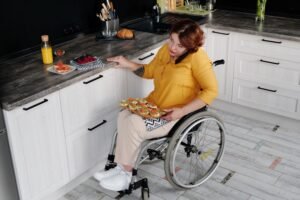
NDIS meal preparation and delivery is help to get meals made, or brought to you, when you cannot do this yourself because of your disability. The NDIS lists it as a household task, so you can use your funding for it when it relates to your disability and is in line with your plan. The food itself, however, stays your own cost. This guide explains what the NDIS covers, what it does not, and how meal help fits into your plan.
Quick summary
- Meal preparation and delivery sits under household tasks, one of the 37 categories of NDIS supports.
- The task must be one you cannot do yourself because of your disability.
- Groceries, including all food and drinks, are not NDIS supports.
- Fast food, takeaway and food delivery platforms are not NDIS supports. The exception is a meal delivery platform that separates the food from the preparation and delivery.
- Flexible assistance with daily life funding can pay support workers to help you prepare meals.
- The NDIS can also fund training so you can prepare meals more independently.
What is NDIS meal preparation and delivery?
The NDIS publishes a list of supports that are NDIS supports. It has 37 categories, and household tasks is one of them. The NDIS describes this category as supports that provide assistance with essential household tasks that a participant is not able to do themselves because of their disability.
Meal preparation and delivery is the first example in that category. The other two are house or yard maintenance, and cleaning and laundry. Our guide to NDIS household tasks covers the whole category.
The NDIS also sets three tests for every purchase. According to its page on what NDIS supports are, you can only use your funding for items that are NDIS supports, related to your disability, and in line with your plan. So the starting point is simple: which parts of making a meal can you not manage because of your disability?
Meal delivery and the cost of food
The NDIS also publishes a list of supports that are not NDIS supports. Two items on it shape how meal help works:
- groceries, including all food, beverage, cleaning, household and health products
- fast food, takeaway food and food delivery platforms, except meal delivery platforms where the food and ingredient part can be separately identified from the meal preparation and delivery part.
In other words, the food is a grocery cost that you pay. Takeaway and fast food stay on the not-supports list. A meal delivery platform only falls outside that exclusion when its food and ingredients can be separately identified from the preparation and delivery.
Before you sign up to a meal service, therefore, ask how it shows those two parts. Your support coordinator or plan manager, if you have one, can also help you work out how to use the funding in your plan.
How meal help fits into your plan
The NDIS groups your funding into support categories. According to the NDIS page on core supports, you might use assistance with daily life funding to hire support workers for everyday tasks like cleaning, yard maintenance, cooking and personal care.
The NDIS guideline on using your plan gives a matching example. With flexible funding for assistance with daily life, you can pay support workers to help you in your daily life. For instance, you may choose support with preparing meals, as long as you buy NDIS supports that are in line with your plan.
Next, check whether that funding is flexible or stated. Flexible funding gives you more choice about the supports you buy. With stated funding, on the other hand, you must follow your plan’s description exactly. In fact, one of the guideline’s examples of a stated support is a limit on how much meal preparation you can buy each month.
Newer plans also show funding components. One component might include more than one core support category, such as assistance with daily life and consumables. At 1 Care Connect, our meal preparation support in Western Sydney covers meal planning, shopping support, and cooking with you or for you. For the wider budget, read our guide to NDIS assistance with daily life.
Learning to cook for yourself
Meal help does not have to mean someone else cooking. The NDIS list also includes development of daily care and life skills. These are training and development activities that increase your ability to live as independently as possible. Its examples include shopping and meal preparation.
The capacity building budget can help with food as well. For example, the NDIS says improved health and wellbeing funding can include working with a dietitian to make a meal plan. The NDIS describes capacity building funding as stated, so you use it as your plan describes.
Supported independent living can include skill building too. The NDIS guideline says it may include support to build your skills in meal preparation and cooking. Our guide to NDIS life skills explains how skill building works.
Special diets, swallowing and tube feeding
Some food-related needs sit in other categories. The NDIS describes disability-related health supports as including supports, services and assistive products to manage dysphagia, diabetes and nutrition, among other needs.
Equipment and products have their own categories too:
- Assistive products for household tasks include products for preparing food and drink, and the extra cost of upgrading a standard item to one with accessibility features.
- Assistive products for personal care and safety include modified foods, including for PEG feeding.
- The consumables support category includes Home Enteral Nutrition (HEN) products.
Standard household items, by contrast, are not NDIS supports. The NDIS names fridges, dishwashers, food processors, and non-modified kitchen utensils and crockery as examples.
Getting the most from meal support
A few simple steps make meal help easier to arrange:
- Write down which parts of a meal you cannot manage because of your disability: planning, shopping, cooking or cleaning up.
- Check your plan to see whether your assistance with daily life funding is flexible or stated.
- Decide whether you want meals made for you, help to build your own skills, or both.
- Keep the cost of food in your own household budget.
- If you use a meal service, ask how it separates the food from the preparation and delivery.
- If anything is unclear, ask your my NDIS contact for a plan implementation meeting.
Frequently asked questions
Does the NDIS pay for meal delivery?
Meal preparation and delivery is one of the household tasks on the NDIS supports list. However, food delivery platforms are on the list of supports that are not NDIS supports. The exception is a meal delivery platform where the food and ingredient part can be separately identified from the preparation and delivery part. Either way, you pay for the food.
Will the NDIS pay for my groceries?
No. Groceries, including all food and drinks, are on the list of supports that are not NDIS supports. Likewise, the NDIS guideline says supported independent living does not include the cost of groceries.
Can a support worker cook my meals?
It can. The NDIS gives preparing meals as an example of what flexible assistance with daily life funding can pay support workers for. The support must still be an NDIS support for you and in line with your plan.
Can the NDIS help me learn to cook?
Yes, it can. Development of daily care and life skills is an NDIS support category, and its examples include meal preparation and shopping. The aim is to increase your ability to live as independently as possible.
Which part of my plan pays for meal preparation?
The NDIS uses assistance with daily life, a core support category, as its example. Your plan shows which categories or funding components you have, and whether each one is flexible or stated.
Does the NDIS fund special diets or tube feeding?
Some of these needs can be NDIS supports. The NDIS lists supports to manage dysphagia, diabetes and nutrition as disability-related health supports. It also lists modified foods for PEG feeding as an assistive product, and Home Enteral Nutrition products as consumables. Ordinary food is still a grocery cost.
How 1 Care Connect can help
Meal preparation is one of the nine supports 1 Care Connect offers, and Household Tasks is one of our approved NDIS registration groups. Our team helps with meal planning, shopping support, and cooking with you or for you. We plan meals around special diets, health conditions and cultural preferences, with nurse oversight where health needs are involved. We can also help you build your cooking skills at your own pace.
If you live in Parramatta, our page on NDIS home care in Parramatta shows how cooking and meal preparation fit alongside other help at home. To talk about meal support in your plan, call 1300 264 942, email contact@1careconnect.com.au or send us an enquiry.
Related reading
- Around the home: NDIS household tasks and what the NDIS does not fund.
- Everyday help: NDIS assistance with daily life, the core support category behind it.
- Doing more for yourself: NDIS life skills and how skill building works.
Sources: NDIS, Supports that are NDIS supports; NDIS, Supports that are not NDIS supports; NDIS, What are NDIS supports; NDIS, What are core supports; NDIS, What are capacity building supports; NDIS Our Guideline, Your plan (1 October 2026); NDIS Our Guideline, Supported independent living (24 September 2026); NDIS fact sheet, Support categories (all read 21 October 2026). This article is general information only and is not financial, legal or clinical advice. NDIS funding, eligibility and pricing are set by the NDIS and can change. Always check the current details on the NDIS website or with your planner or support coordinator. Last updated: 21 October 2026.