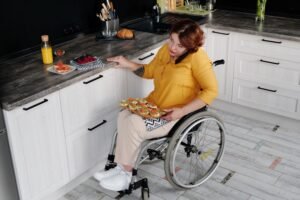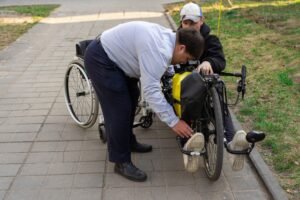
NDIS daily personal activities are the supports that help you with personal tasks such as eating, dressing, showering, toileting and moving around, so you can live as independently as possible. The NDIS names this support on its official list, and it also lists what sits just outside it. This guide explains both, so you know what to ask for and what to plan for yourself.
Quick summary
- Daily personal activities is one of the 37 categories of NDIS supports.
- It covers supervision or assistance with eating and drinking, dressing, toileting, personal hygiene, and moving and positioning.
- Hair washing and drying, and nail cutting and cleaning, are part of personal hygiene on the NDIS list.
- Haircuts, styling, manicures, pedicures and makeup are on the list of supports that are not NDIS supports.
- High intensity daily personal activities is a separate category, delivered by workers with additional qualifications.
- In a plan, the NDIS describes assistance with daily life as support with your personal tasks, which can be flexible or stated.
What are NDIS daily personal activities?
The NDIS publishes a list of the supports it can fund. It has 37 categories, and daily personal activities is one of them. In the NDIS’s words, this category covers supports that provide supervision or assistance with personal daily living tasks, to help a participant live as independently as possible in their own home and in the community.
The list then sets out what the category includes:
- assistance with eating and drinking, dressing and toileting
- maintaining personal hygiene, including showering, bathing, hair washing and drying, and fingernail and toenail cutting and cleaning
- moving and positioning
- in-kind personal care in school.
Notice the word supervision. Support does not always mean someone does the task for you. Sometimes it means a worker stays nearby, prompts the next step or keeps you safe while you do it yourself. At 1 Care Connect, our personal care in Western Sydney works this way, with help sized to however much or little you need.
In addition, a support does not need to appear as a specific example to count. According to the NDIS page on what NDIS supports are, it must fit one of the 37 categories and the overall description. It also must not appear on the list of supports that are not NDIS supports.
Where personal care stops and the beauty budget starts
The NDIS also publishes a list of supports that are not NDIS supports. Several items on it sit right next to personal hygiene, so the line is worth knowing before you plan your routine.
| On the NDIS supports list | On the not NDIS supports list |
|---|---|
| Hair washing and drying | Hair treatments, cutting, dyeing, styling, extensions and wigs |
| Fingernail and toenail cutting and cleaning | Manicures, pedicures, nail painting and nail decorations |
| Assistance with dressing | Standard clothing and footwear that is not modified or adaptive |
| Maintaining personal hygiene | Makeup, cosmetics and cosmetic treatments |
In other words, the NDIS can fund help to wash and dry your hair, but not a haircut. Likewise, a worker can help you clean and cut your nails, while a manicure is your own cost. The same logic applies to products. Groceries, including health products, are on the not NDIS supports list as well.
High intensity support is a separate category
Some personal care needs extra skill. For this reason, the NDIS list has a separate category called high intensity daily personal activities. These supports assist a participant with complex needs. The NDIS says they must be provided by a worker with additional qualifications and experience relevant to the participant’s complex or psychosocial needs.
That worker might do the activities, or supervise the participant or another person in their support network while they do them. Our guide to NDIS high intensity support explains which supports fall into this group. Nursing care that needs a high level of clinical skill, on the other hand, is a separate category again, called community nursing care. Our community nursing service covers that side.
Equipment that helps you do it yourself
Help does not always come from a person. The NDIS lists assistive products for personal care and safety as its own category. It includes products that help with washing and drying your body, caring for your body and dressing. It also includes modified or adaptive clothing and products to manage incontinence.
Furniture and other products adapted for your home can be included too, where they help with movement, positioning and safety. So can the services to assess, prescribe, deliver and adjust a product, and to train you to use it well.
How NDIS daily personal activities fit into your plan
Your plan describes your NDIS supports using support categories. The NDIS describes assistance with daily life as supports to assist or supervise you with your personal tasks during day-to-day life, so you can live as independently as possible. These supports can be provided in a range of places, including your own home.
Next, check whether your plan describes that funding as flexible or stated. Flexible funding is described generally, so you have more choice. Stated funding, by contrast, must be used exactly as your plan describes. Sometimes that means a particular provider, a particular qualified person or a particular way of delivering the support.
The NDIS also sets three tests for every purchase. If personal care is funded in your plan, you can only use that funding for items that are NDIS supports, related to your disability, and in line with your plan. For the funding side in more detail, read our guide to NDIS personal care.
The support items on your invoices
The NDIS Pricing Schedule 2026-27 took effect on 24 September 2026. It lists support items by name and number, together with their maximum prices. Its support worker items include ones called Assistance With Self-Care Activities. They are listed separately for weekday daytime, weekday evening, weekday night, Saturday, Sunday and public holidays, and there is a night-time sleepover item as well.
Because of this, the time of day matters. The schedule says that if a support runs across two time periods and one worker delivers it, the higher amount applies to the whole support. Also, the maximum prices apply when your funding is Agency-managed or plan managed. This guide does not list prices, because they can change. You can read the current schedule on the NDIS pricing arrangements page.
Planning your personal care routine
A little preparation makes personal care easier to arrange and easier to get right:
- Write down each personal task in your day, and whether you need supervision, a prompt or full help.
- Note the times you need help, because the time of day changes which support item applies.
- Check your plan to see whether your assistance with daily life funding is flexible or stated.
- Ask whether a product could help you do part of a task yourself.
- Keep haircuts, cosmetics and grocery items in your own budget.
- If anything is unclear, talk to your my NDIS contact. The NDIS says you can talk to them at any time if you need some extra help with your plan.
Frequently asked questions
What are daily personal activities in the NDIS?
They are supports that provide supervision or assistance with personal daily living tasks. The NDIS lists eating and drinking, dressing, toileting, personal hygiene, and moving and positioning. The aim is to help you live as independently as possible at home and in the community.
Does the NDIS pay for showering help?
It can. Showering and bathing are part of maintaining personal hygiene, which the NDIS lists under daily personal activities. As with any support, it needs to be related to your disability and in line with your plan.
Will the NDIS pay for a haircut?
No. Hair cutting, styling and other hair treatments are on the list of supports that are not NDIS supports. However, help with hair washing and drying is part of daily personal activities.
Can a support worker help me take my medication?
The NDIS says personal care support may include general hygiene, dressing or helping you take your medication. The level of help depends on your needs. Our personal care includes medication prompting, and our nursing team oversees every personal care plan.
Is personal care the same as household tasks?
No. They are separate categories on the list of NDIS supports. Daily personal activities cover looking after yourself, while household tasks cover essential jobs around the home.
What happens if my funding runs low?
Contact your my NDIS contact, support coordinator or recovery coach as soon as possible. The NDIS says that, in very limited circumstances, it may pay for supports outside your plan. It generally only considers essential supports you rely on every day, like personal care.
Should my support worker have a screening check?
The NDIS says it is a good idea to make sure your support workers have completed an NDIS worker screening check. It is a national assessment of whether a person is suitable to work with people with disability.
How 1 Care Connect can help
At 1 Care Connect, personal care covers showering, bathing and hygiene, dressing and grooming, continence care, medication prompting, and mobility and transfers. You get a consistent, carefully matched support worker, and our nursing team oversees every personal care plan. Assist-Personal Activities is one of our approved NDIS registration groups. If you live near our head office, our page on NDIS home care in Parramatta shows how this support works locally.
To talk about the personal care in your plan, call 1300 264 942, email contact@1careconnect.com.au or send us an enquiry.
Related reading
- NDIS personal care: which part of your plan pays for personal care.
- NDIS household tasks: what the NDIS funds around the home and what it does not.
Sources: NDIS, Supports that are NDIS supports; NDIS, What are NDIS supports; NDIS, Supports that are not NDIS supports; NDIS fact sheet, Support categories; NDIS Our Guideline, Your plan (1 October 2026); NDIS, What is a support worker; NDIS, What is a plan implementation meeting; NDIS Pricing Schedule 2026-27 and the NDIS pricing arrangements page (all read 21 October 2026). This article is general information only and is not financial, legal or clinical advice. NDIS funding, eligibility and pricing are set by the NDIS and can change. Always check the current details on the NDIS website or with your planner or support coordinator. Last updated: 21 October 2026.