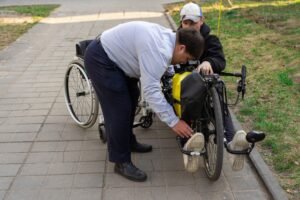
NDIS social and community participation is support that helps you take part in community, social, cultural and civic life when you need extra help to do so because of your disability. It can mean a support worker beside you at a class, help to build the skills to go on your own, or support in a group. The NDIS is clear, though, that it may fund the extra help, not the activity itself. This guide explains what is covered, what you pay for, and how the NDIS decides.
Quick summary
- The NDIS lists participation in community, social and civic activities as an NDIS support.
- It can fund the extra help you need to join in because of your disability.
- You still pay the costs everyone pays, like membership, entry fees and standard equipment.
- Support can be short term, to build your skills, or ongoing.
- Funding must be related to your disability and in line with your plan and goals.
- Community organisations, shops and sporting clubs must also make reasonable adjustments.
What is NDIS social and community participation?
The NDIS list of supports that are NDIS supports has 37 categories. One of them is participation in community, social and civic activities. The NDIS describes it as supports that assist a participant to take part in community, social, cultural and civic activities. It also includes supporting you during the activity, and working with you to develop your ability to take part.
Two related categories sit next to it. First, group and centre based activities cover the same kinds of activities in a group setting, either in the community or in a centre. Innovative community participation, by contrast, is tailored for participants with extraordinary support needs.
The NDIS says it funds most social and recreation supports in your Core budget. One core support category, assistance with social, economic and community participation, covers supports to help or supervise you to take part in community, social, recreational or economic activities. These supports can be provided in a range of places, such as in the community or in a centre. At 1 Care Connect, this is the work of our community access in Western Sydney, with a consistent support worker who knows your goals.
What activities can it include?
According to the NDIS guideline on social and recreation support, these activities are part of everyday life. In fact, they are things people do for fun, and they can help your health and wellbeing. Examples the NDIS gives include:
- visiting your friends and family
- active hobbies, like bike riding or kayaking
- playing sport, like tennis or basketball
- going out, for example to the movies or a concert
- going places for fun, like shopping or visiting a museum
- relaxing, like meditation or yoga
- learning new skills, like dance or art classes.
What NDIS social and community participation can fund
The NDIS may fund the extra help you need to take part because of your disability. Its guideline gives a simple example. For instance, if you want to go to a pottery class, you pay for the class. The NDIS might then fund a support worker to help you use the pottery wheel, or to support you to attend if you cannot go on your own because of your disability.
Other examples of supports the NDIS may fund include:
- specialised equipment, or changes to equipment, to help you join in
- help to build your skills to take part
- a support worker to help you participate, like help changing into sports clothes or setting up for the activity
- help to travel to a recreation event when you cannot use public transport, and it is not reasonable for family or friends to take you.
Support does not have to be forever. Instead, the NDIS says short-term support may build your skills so you can take part on your own, or connect you with someone who can help you regularly. If you need ongoing support, the NDIS may fund that as well. If you already have funding for core supports in your plan, you can use it for this help.
What you still pay for
The NDIS expects you to pay the costs of an activity that everyone pays. Its guideline lists these examples of what it does not fund:
- the basic cost of activities, like entry fees, registration and membership fees
- standard equipment, like a standard tennis racket or soccer shoes
- taking part at a professional or elite level
- support for a young child where parents would normally stay and support their child.
When the NDIS funds this support, it funds it so you can take part at an entry level. So if you want to compete at an elite level, you pay the extra costs.
How the NDIS decides
All supports must meet the NDIS funding criteria, starting with whether something is one of the NDIS supports on the official list. For social and recreation support, the guideline asks whether the support is:
- an NDIS support for you
- directly related to your disability support needs
- helping you pursue your goals
- value for money
- effective and beneficial for you
- legal and safe
- something your family, friends or community would be expected to provide.
Community options count too. Many local clubs and community organisations run social activities, and if one of them provides the help you need, you might not need NDIS funded support. In addition, community organisations, shops and sporting clubs must take steps to remove barriers you face because of your disability, such as installing ramps and wide doorways. The NDIS calls these reasonable adjustments.
Age matters as well. The NDIS expects parents to help children get to and from activities, but it does not expect parents to provide that help for adult children. When you are ready to choose who supports you, our guide on how to choose an NDIS provider covers the questions to ask.
Frequently asked questions
Does the NDIS pay for community activities?
The NDIS can fund the extra help you need to take part because of your disability. It does not pay the general costs of the activity, such as membership, entry fees or standard equipment.
Can a support worker come with me to a class or event?
It can, if you need that help because of your disability. The NDIS gives the example of a support worker who helps you use a pottery wheel, or supports you to attend a class you cannot go to on your own.
Will the NDIS pay my club membership?
No. The NDIS says membership, registration and entry fees are costs everyone pays. Its list of supports that are not NDIS supports also includes membership and entry to a recreational club. Therefore, you pay them yourself.
Can the NDIS help me get to activities?
It can fund help to travel to a recreation event when you cannot use public transport and it is not reasonable for family or friends to take you. Our NDIS transport team can take you to an activity and support you while you are there.
Is group support an option?
It can be. Group and centre based activities are a separate NDIS support category, for activities in a group in the community or in a centre. The NDIS also looks at value for money, and says you might be able to share supports rather than needing individual supports. Our guide to disability day programs explains how group activities are funded.
Which part of my plan pays for it?
The NDIS says it funds most social and recreation supports in your Core budget, and any assistive technology for them in your Capital budget. Newer plans show funding as funding components, and one component can cover several core categories, including assistance with social, economic and community participation. Your plan will still show whether the supports are flexible or stated.
How 1 Care Connect can help
Our community access support helps you join social activities and hobbies, get to appointments and shopping, and connect with others, at your own pace. Our NDIS group programmes offer structured activities where people build skills, confidence and friendships together. Every service is delivered by our own trained, nurse-led team.
To talk about community participation in your plan, call 1300 264 942, email contact@1careconnect.com.au or send us an enquiry.
Related reading
- NDIS household tasks: what the NDIS funds around the home and what it does not.
- NDIS in home support: what to expect when support workers come to your home.
Sources: NDIS, Supports that are NDIS supports; NDIS fact sheet, Support categories; NDIS Our Guideline, Social and recreation support (7 April 2025); NDIS, What are NDIS supports (all read 21 October 2026). This article is general information only and is not financial, legal or clinical advice. NDIS funding, eligibility and pricing are set by the NDIS and can change. Always check the current details on the NDIS website or with your planner or support coordinator. Last updated: 21 October 2026.